TERO Project & Fertilizer Management
The use of organic residual fertilizers and amendments (ORFAs), as well as mineral fertilizers, requires a thorough understanding of their agronomic properties to ensure that sugarcane fertilization closely matches crop nutrient requirements. In a context of rising input costs, increasing demand for technical efficiency, and the need to reduce environmental impacts, eRcane conducts research aimed at improving fertilization recommendations and strengthening decision-support tools available to growers.
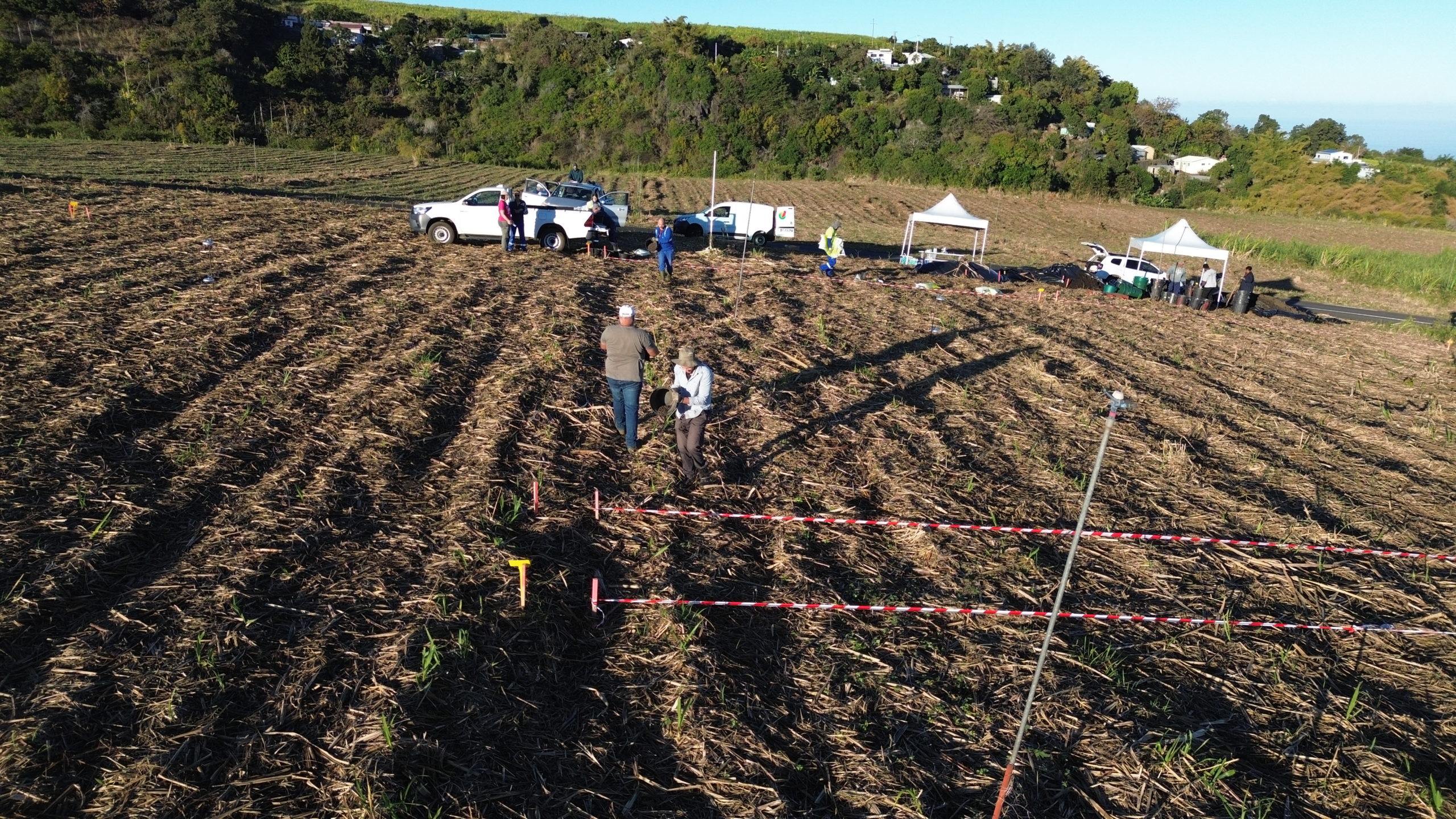
To address these challenges, the TERO project relies on a network of field trials established across a range of soil and climatic conditions on Réunion Island. This work seeks to better characterize the fertilizer value of ORFAs and their mineralization dynamics in order to optimize their use either as a supplement to or a substitute for mineral fertilizers. Particular attention is given to nitrogen, a key nutrient driving sugarcane productivity and yield formation.
In parallel, research is conducted on the overall management of fertilization practices to refine recommendations according to soil characteristics, soil analyses, previous organic applications, yield targets, and farm-specific constraints. These data notably contribute to the continuous improvement of the Amenda decision-support tool, which helps growers develop fertilization plans tailored to their individual situations.
Long-term experiments conducted across several research sites focus on:
- determining the Apparent Nutrient Recovery Coefficients (ANRC) and Nitrogen Fertilizer Equivalency Values (NFEV) of different ORFAs;
- evaluating their direct fertilizing effects as well as their residual effects over multiple cropping cycles;
- optimizing fertilization strategies that combine organic resources and mineral fertilizers;
- improving nitrogen-use efficiency while reducing the risk of nutrient losses to the environment;
- generating technical references to enhance advisory tools and farm-level fertilization recommendations.
Eight ORFAs are currently being evaluated within the TERO project:
- sugar mill filter cake;
- pig slurry;
- poultry manure;
- livestock manure compost from Camp Pierrot;
- green waste compost;
- wastewater treatment sludge;
- digestate produced from the anaerobic digestion of distillery vinasse;
- pelleted chicken manure.
Together, these research activities contribute to the development of fertilization strategies that are more efficient, more cost-effective, and increasingly based on the utilization of locally available organic resources.